
- By Shanna Salazar
- Blog
- 0 Comment
Choosing the right roofing membrane is one of the most important decisions you’ll make when installing or replacing a commercial roof. In New Mexico, where buildings face intense sunlight, high summer temperatures, sudden monsoon storms, and significant temperature fluctuations, the material you select can affect everything from energy costs to long-term maintenance.
Two of the most common options for flat and low-slope commercial buildings are EPDM (ethylene propylene diene monomer) and TPO (thermoplastic polyolefin). Both are single-ply roofing membranes designed to provide dependable waterproofing, but they differ in construction, installation methods, reflectivity, and maintenance requirements.
For commercial property owners in Albuquerque, Rio Rancho, Los Lunas, and surrounding New Mexico communities, understanding these differences can help determine which system offers the best value for their building.
If you’re exploring roofing materials beyond EPDM and TPO, our Complete Guide to Commercial Roofing in Albuquerque, NM covers additional options, maintenance considerations, and factors that influence commercial roofing decisions.
What Is EPDM Commercial Roofing?
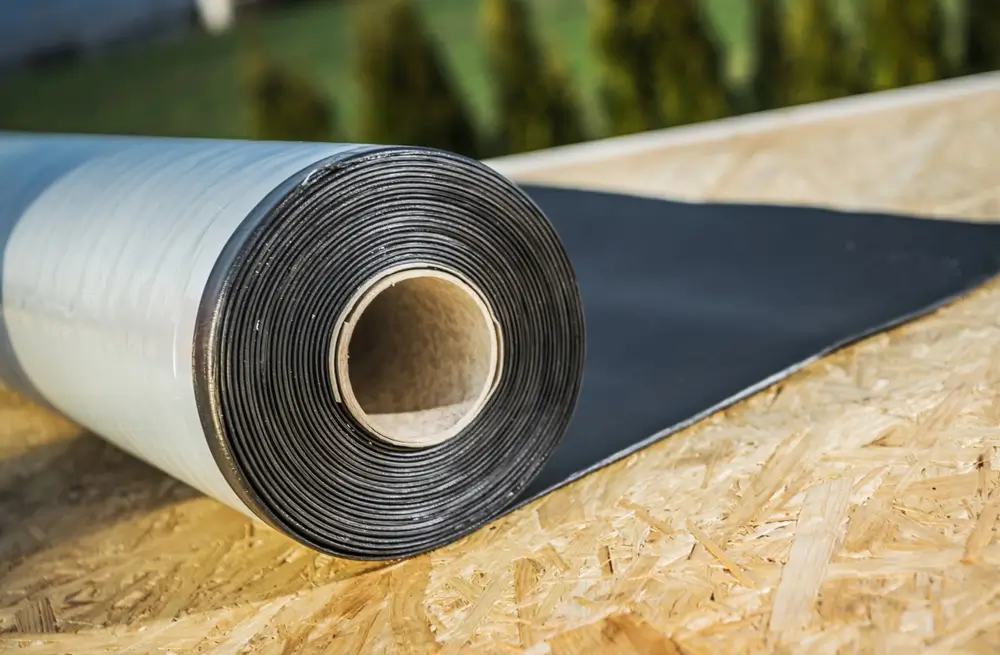
EPDM is a synthetic rubber roofing membrane that has been used on commercial buildings for decades. Known for its flexibility and resistance to weathering, EPDM is commonly installed on warehouses, office buildings, retail properties, and other structures with large flat or low-slope roofs.
Most EPDM roofing membranes are black, although white EPDM products are also available. The material is manufactured in large sheets that can be fully adhered, mechanically attached, or installed using a ballasted system, depending on the building’s design and structural requirements.
One of EPDM’s greatest advantages is its ability to remain flexible as temperatures change. New Mexico’s high-desert climate can bring hot afternoons followed by much cooler nights, creating repeated expansion and contraction across roofing surfaces. EPDM’s elasticity helps accommodate these movements when the system is properly designed and installed.
EPDM also offers excellent resistance to UV exposure, ozone, and general weathering. However, traditional black EPDM absorbs more solar heat than white reflective membranes, which can be an important consideration for commercial buildings with significant cooling demands.
EPDM seams are generally joined using specialized seam tapes and adhesives rather than heat welding. These systems can provide dependable waterproofing, but proper installation and periodic seam inspections are essential for long-term performance.
What Is TPO Commercial Roofing?
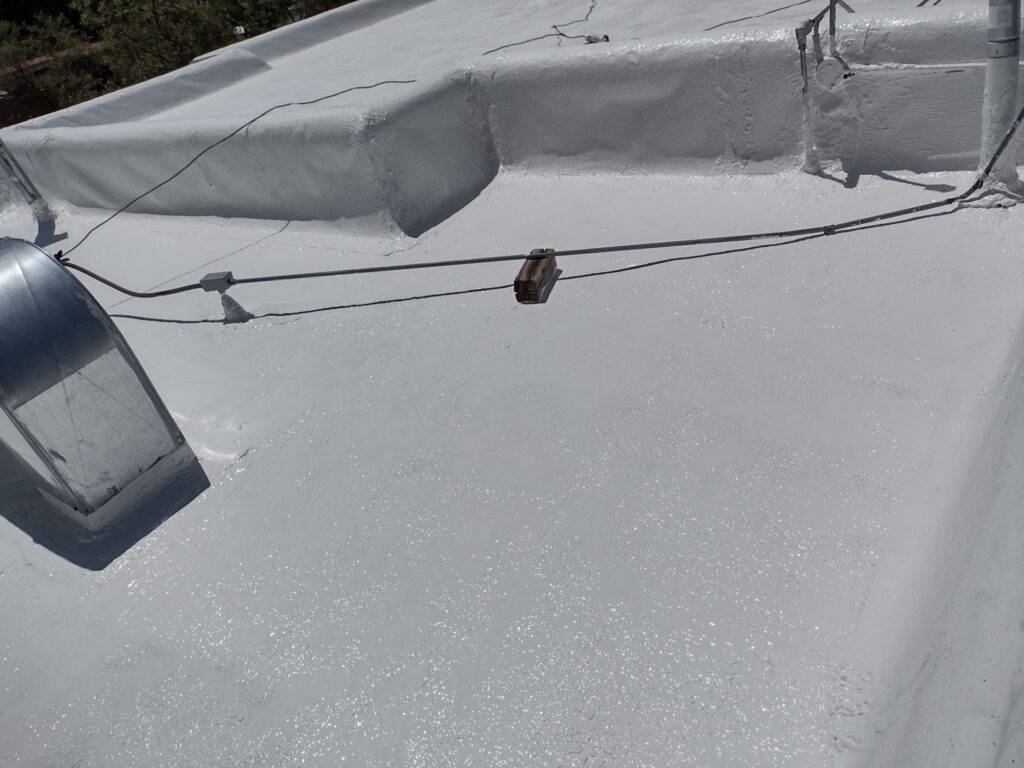
TPO is a thermoplastic single-ply roofing membrane commonly used on commercial and industrial buildings. It has become a popular option for property owners looking for a balance of energy efficiency, durability, and installation cost.
Unlike traditional black EPDM, TPO is frequently installed in white or other light-reflective colors. Its reflective surface helps limit solar heat absorption, which can be particularly beneficial for commercial properties exposed to Albuquerque’s intense summer sunshine.
TPO membranes are typically reinforced and installed using mechanically attached or fully adhered methods. One of the system’s distinguishing characteristics is its heat-welded seams. During installation, specialized equipment uses hot air to fuse overlapping membrane sections together, creating a continuous waterproof connection.
These welded seams can provide excellent resistance to water intrusion when installed correctly. TPO is also designed to resist UV exposure, ozone, and common environmental conditions that contribute to roofing deterioration.
For commercial buildings with large roof areas, extensive HVAC equipment, or high cooling expenses, TPO’s reflective properties can make it an attractive long-term investment.
Learn more about our TPO roofing services in Albuquerque and how this system can be used for commercial flat roofs.
EPDM vs. TPO Roofing: Key Differences
Although EPDM and TPO serve similar purposes, their material properties create important differences in performance, installation, and maintenance.
Feature | EPDM Roofing | TPO Roofing |
|---|---|---|
Material | Synthetic rubber | Thermoplastic membrane |
Common color | Black; white available | White; other colors available |
Solar reflectivity | Lower with black EPDM | High with white TPO |
Seam installation | Tape and adhesive systems | Heat-welded seams |
Flexibility | Excellent | Good |
UV resistance | Excellent | Good to excellent, product-dependent |
Typical service life | Approximately 20–30+ years | Approximately 20–30 years |
Installation cost | Often competitive | Often competitive |
Maintenance | Inspect seams, flashing, and punctures | Inspect welds, flashing, and punctures |
Key advantage | Proven weathering performance and flexibility | Reflectivity and welded seams |
These service-life ranges are general estimates rather than guarantees. Actual performance depends on membrane thickness, manufacturer, installation quality, roof design, maintenance, and environmental exposure.
Neither membrane is automatically the better choice for every building. The most appropriate system depends on the property’s specific requirements.
How Do EPDM and TPO Perform in New Mexico’s Climate?
New Mexico’s climate creates roofing challenges that differ from those in regions with more moderate temperatures or frequent rainfall. Commercial roofing systems must withstand prolonged UV exposure, seasonal storms, wind, and rapid temperature changes while protecting the building beneath them.
Extreme Sunlight and UV Exposure
Albuquerque receives abundant sunshine throughout the year, placing commercial roofing materials under consistent ultraviolet exposure.
EPDM has a long history of resistance to UV radiation and ozone, making it a dependable option for exposed roofing applications. Its rubber composition is designed to tolerate outdoor weathering without requiring a protective surface coating in many standard installations.
TPO also contains UV-resistant formulations, but performance can vary between manufacturers and product generations. Choosing a quality membrane with an appropriate warranty is especially important in high-sun environments.
Both materials can perform well in New Mexico, but long-term results depend heavily on the quality of the product and installation.
Summer Heat and Energy Efficiency
One of the biggest differences between EPDM and TPO is how they interact with solar heat.
Traditional black EPDM absorbs a significant amount of sunlight, causing roof surface temperatures to rise during hot weather. While this does not necessarily mean the roofing system is inefficient, it can increase cooling demands depending on the insulation, building design, and HVAC system.
White TPO reflects more solar radiation, helping keep the roof surface cooler. For large commercial buildings with substantial air-conditioning needs, this can contribute to lower cooling loads and improved energy performance.
However, membrane color is only one factor in overall building efficiency. Insulation thickness, roof assembly design, ventilation, and building use can have an equally important influence on energy costs.
For many Albuquerque commercial properties, white TPO deserves serious consideration when reducing summer cooling expenses is a priority.
Temperature Swings and Material Movement
New Mexico’s high-desert climate can produce significant temperature differences between daytime and nighttime.
EPDM’s rubber composition gives it excellent flexibility, allowing it to accommodate movement caused by thermal expansion and contraction. This characteristic is particularly valuable on large roof surfaces and buildings with complex roof geometry.
TPO also accommodates temperature changes, although its performance depends on the membrane formulation, attachment method, and installation details.
Both systems must be properly designed to handle building movement, especially around roof edges, penetrations, and transitions.
Monsoon Rain, Hail, and Wind
Although New Mexico is relatively dry, summer monsoon storms can bring sudden heavy rainfall, strong winds, and hail.
Both EPDM and TPO provide effective waterproofing when installed as complete roofing systems. However, the membrane alone cannot compensate for poor drainage, damaged flashing, or improperly installed seams.
TPO’s heat-welded seams offer an advantage in creating continuous waterproof connections. EPDM’s taped seam systems can also provide reliable protection when properly prepared and installed.
Neither material is completely resistant to punctures or storm damage. Hail impact, wind uplift, debris, and rooftop equipment can damage either membrane depending on its thickness, underlying substrate, and overall assembly.
For commercial buildings throughout Albuquerque and central New Mexico, proper drainage, secure attachment, and routine inspections are just as important as the membrane itself.
Which Roofing Membrane Lasts Longer: EPDM or TPO?
Commercial property owners often focus on lifespan when comparing roofing materials, and for good reason. A roof replacement is a major investment, and the goal is to maximize the system’s useful life while controlling repair and maintenance expenses.
EPDM has a long track record in commercial roofing, with properly installed and maintained systems commonly lasting 20 to 30 years or longer under favorable conditions.
TPO roofing systems are also commonly designed around service lives of approximately 20 to 30 years, although performance varies with product quality, thickness, installation, and exposure.
The important distinction is that material selection alone does not determine roof longevity.
A high-quality membrane installed over damaged insulation or a poorly designed drainage system may fail prematurely. Likewise, inadequate flashing around HVAC units, vents, and other penetrations can create leaks even when the membrane itself remains in good condition.
Regular maintenance, prompt repairs, and professional inspections help protect either investment.
EPDM vs. TPO Roofing Costs in Albuquerque
Cost is often one of the deciding factors when choosing between EPDM and TPO for a commercial roof.
Both materials are generally considered cost-effective single-ply roofing options, but neither is consistently less expensive in every situation.
EPDM may offer installation savings on certain straightforward roof layouts, depending on the attachment method and labor requirements. TPO can also be competitively priced, particularly on larger commercial properties where efficient installation and long-term energy performance are priorities.
The final cost of either system depends on several factors, including roof size, membrane thickness, insulation requirements, roof accessibility, existing roof removal, drainage improvements, and the number of rooftop penetrations.
For example, replacing the roof on a large warehouse in Los Lunas may involve different materials and installation requirements than reroofing an office building in Albuquerque with multiple HVAC units and complex flashing details.
Property owners should also consider the total cost of ownership rather than focusing exclusively on the initial installation estimate. Potential energy savings, maintenance requirements, repair costs, and expected service life all contribute to the overall value of the roofing system.
A detailed commercial roof inspection and estimate provide the most reliable basis for comparing EPDM and TPO costs for your specific building.
Which Is Better for Commercial Roof Repairs and Maintenance?
Both EPDM and TPO require periodic maintenance to protect their waterproofing performance.
EPDM repairs typically involve compatible rubber membrane patches, seam tapes, adhesives, and specialized preparation methods. Because EPDM has been widely used for decades, experienced commercial roofing contractors are familiar with its repair requirements.
TPO repairs often involve heat-welding compatible membrane patches over damaged areas. When completed correctly, this process creates a durable connection between the existing membrane and repair material.
However, both systems require appropriate cleaning, surface preparation, and material compatibility. Older or heavily weathered membranes can sometimes be more challenging to repair.
Commercial property owners should schedule regular inspections to identify punctures, deteriorating flashing, seam problems, drainage obstructions, and storm-related damage.
For a broader look at roofing materials, maintenance, and replacement considerations, explore our Complete Guide to Commercial Roofing in Albuquerque, NM to help you make an informed decision about your building’s roofing system.
When Should You Choose EPDM Over TPO?
EPDM may be the better choice for commercial properties where flexibility, established long-term performance, and specific roof assembly requirements are the primary considerations.
Buildings with large, relatively uncomplicated roof surfaces can be good candidates for EPDM. Its elasticity can also be valuable on structures experiencing significant thermal movement.
EPDM may be worth considering when a property owner prefers a traditional rubber membrane with an extensive performance history or when the existing roof design is particularly well suited to an EPDM system.
However, the heat absorption associated with black EPDM should be evaluated carefully on commercial buildings with high summer cooling demands. White EPDM and other assembly options may help address this concern.
When Is TPO the Better Choice for a New Mexico Commercial Roof?
TPO may be particularly attractive for commercial buildings where energy efficiency and reflective roofing are important priorities.
Retail centers, warehouses, office buildings, and other properties with large roof areas exposed to direct sunlight may benefit from a white TPO membrane. Its reflective surface can reduce rooftop heat absorption, while heat-welded seams provide a strong waterproofing method.
TPO can also be a practical choice for commercial roof replacements where the owner wants a modern single-ply roofing system with competitive installation costs.
For Albuquerque businesses looking to improve cooling efficiency without sacrificing dependable waterproofing, TPO is often one of the first materials worth evaluating.
The best choice still depends on the roof’s condition, insulation, drainage, equipment layout, and the building owner’s long-term goals.
Why Professional Roof Design Matters More Than Membrane Selection Alone
Choosing between EPDM and TPO is only one part of planning a successful commercial roofing project.
The insulation beneath the membrane affects energy performance and temperature control. Drainage systems help move rainwater away from the roof surface. Flashing protects vulnerable areas around penetrations and roof edges, while proper attachment methods help the roofing system withstand wind forces.
Even a premium roofing membrane can experience premature problems if these components are overlooked.
At A Honorable Roofing, we believe every commercial roofing project should be evaluated individually. A warehouse in Rio Rancho may require a different approach than a retail building in Albuquerque or a commercial property in Edgewood.
Our goal is to help property owners understand their options and select roofing solutions based on the building’s actual needs, rather than recommending the same material for every project.
Explore our flat roofing services in Albuquerque to learn more about the roofing systems available for residential and commercial properties.
Frequently Asked Questions About EPDM vs. TPO Roofing
Is EPDM or TPO better for commercial roofs in Albuquerque?
Both materials can perform well in Albuquerque. TPO is often preferred when solar reflectivity and cooling efficiency are priorities, while EPDM offers excellent flexibility and a long history of weathering performance. The best option depends on the building’s roof design, insulation, budget, and maintenance needs.
Is TPO more energy-efficient than EPDM?
White TPO generally reflects more sunlight than traditional black EPDM, which can help reduce rooftop temperatures and cooling loads. However, white EPDM is also available, and overall energy efficiency depends on the complete roofing assembly, including insulation and building characteristics.
How long do EPDM and TPO commercial roofs last?
Both EPDM and TPO systems can provide approximately 20 to 30 years of service under suitable conditions. Some systems may last longer, while others may require earlier replacement due to installation problems, storm damage, or insufficient maintenance.
Which roofing membrane is more resistant to hail?
Neither EPDM nor TPO is completely hail-proof. Hail resistance depends on membrane thickness, reinforcement, substrate, insulation, and the tested performance of the complete roofing assembly. Property owners concerned about hail should ask about impact-resistant roof system options rather than comparing membrane materials alone.
Can EPDM or TPO be installed over an existing commercial roof?
In some situations, either membrane may be installed as part of a roof recover system. However, this depends on the condition of the existing roof, moisture levels, structural capacity, material compatibility, and applicable building codes. A professional inspection is necessary to determine whether a recover or complete tear-off is appropriate.
Does TPO roofing require less maintenance than EPDM?
Both systems require regular inspections and preventative maintenance. TPO uses heat-welded seams, while EPDM typically uses taped or adhesive seam systems. Maintenance needs depend on the quality of installation, roof exposure, rooftop traffic, and the condition of flashing and drainage components.
How do I know whether my commercial roof needs repair or replacement?
Common warning signs include recurring leaks, widespread membrane deterioration, damaged flashing, wet insulation, and repeated repairs that fail to resolve existing problems. A professional commercial roof inspection can help determine whether targeted repairs, restoration, or complete replacement is the most cost-effective solution.
Find the Right Commercial Roofing System with A Honorable Roofing
Choosing between EPDM and TPO requires more than comparing materials. Your commercial roof needs to protect your property against New Mexico’s intense sunlight, temperature fluctuations, wind, and seasonal storms while supporting your building’s long-term operating needs.
At A Honorable Roofing, we help commercial property owners throughout Albuquerque, Rio Rancho, Los Lunas, Edgewood, and surrounding communities make informed roofing decisions. From evaluating existing roof conditions to recommending appropriate materials, our team focuses on honest guidance, quality workmanship, and solutions designed for lasting protection.
Whether you’re planning a new commercial roof installation, replacing an aging membrane, or addressing ongoing roof problems, we’re here to help you understand your options.
Schedule a free commercial roof inspection or request an estimate today. Contact A Honorable Roofing or call 505-864-6790 to get started.